01
Distributed
Power is made next to the place that consumes it. That avoids grid transportation trouble — line congestion, losses, and the wait to move megawatts across the network.
ENXIA Inc. · United States
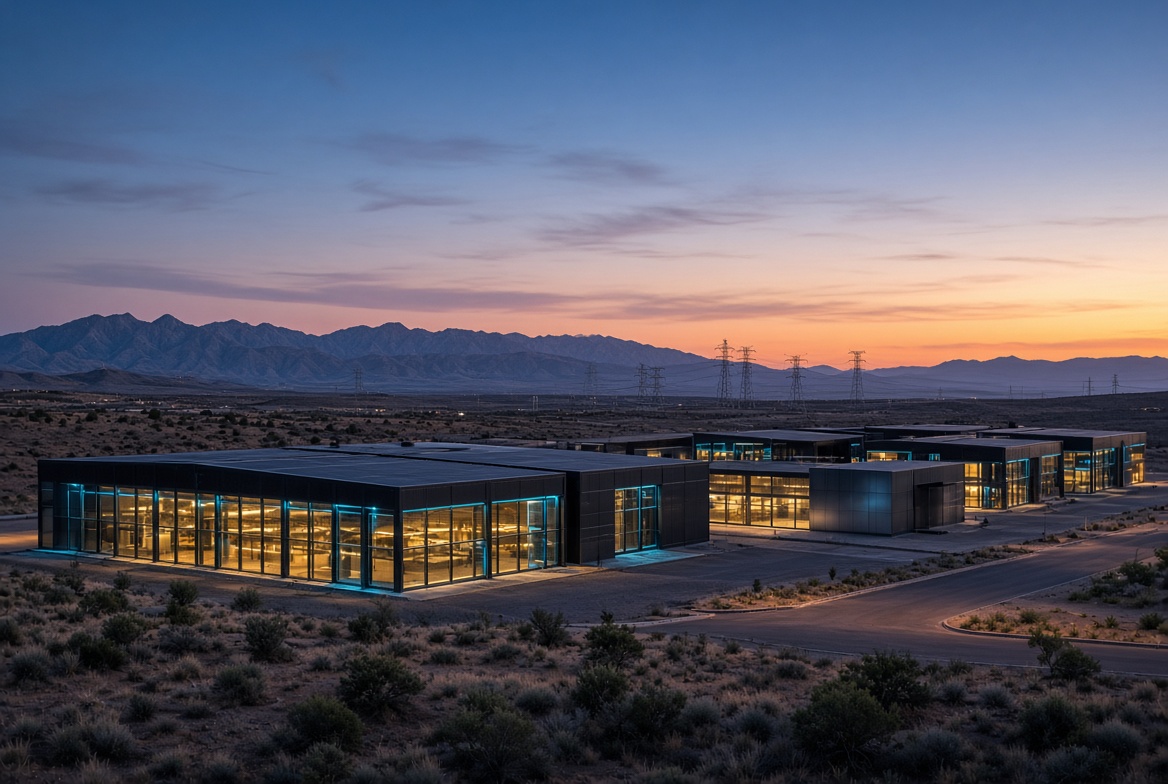
ENXIA’s advantage is distributed, 24×7 supply. AISEG plants sit next to the factory or data campus that uses the power — no combustion fuel, and non-stop, unlike solar and wind that follow the weather and still need the grid to move energy.
The advantage
Other green solutions stop when the sun sets or the wind drops, then lean on the grid or on batteries. ENXIA puts compact AISEG generation at the industrial or data-center site — non-stop supply, with no grid transportation in between.
01
Power is made next to the place that consumes it. That avoids grid transportation trouble — line congestion, losses, and the wait to move megawatts across the network.
02
Unlike solar, wind, and other weather-tied green power, AISEG is specified for non-stop supply — twenty-four hours a day. No battery farm to fill the night.
03
Campus power for AI and cloud facilities that cannot dim with the weather — sized to the hall, specified for high availability, built as arrays of AISEG modules.
Why AISEG
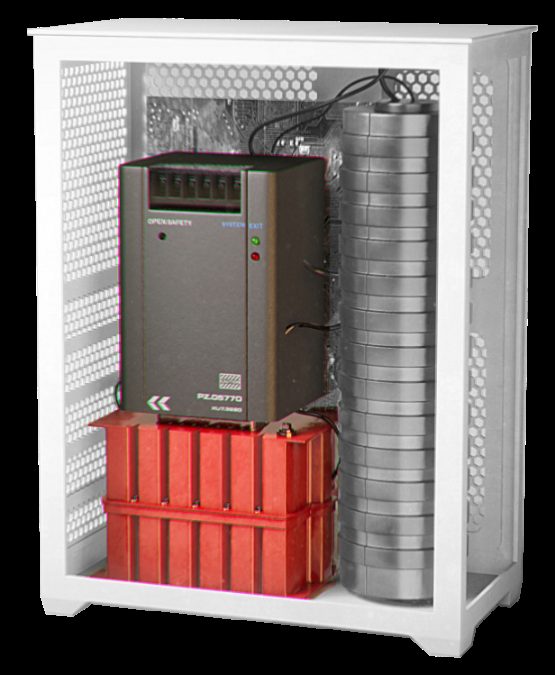
From ENXIA’s September 2026 technology introduction: AISEG is a patented stackable unit. It eliminates physical rotation and produces electromotive force through AI-driven digital power switching. One module is approximately the size of a single solar panel.
Cost — as of today
Current $/kW is calculated from the experimental prototype, not from a volume manufacturing line. Scale production is expected to reduce per-unit cost. Those reductions remain a future outcome; they are not published here as present-day economics.
TODAY
Installed cost per kilowatt sits in the same class as a nuclear power plant. That is the honest figure for the hardware as it exists now — experimental units, not factory volume.
LATER
Manufacturing at scale can bring unit cost down. ENXIA will not treat that path as a current LCOE or a current $/kW. When production cost is measured on a real line, we will publish that number — not a forecast dressed as a spec.
AISEG vs. other energy
Operating rows follow ENXIA’s September 2026 technology introduction. Heat-engine efficiency is not used for AISEG — it is not a thermal plant. The introduction’s startup-energy multiple is listed separately and is not a thermodynamic efficiency percentage. LCOE for AISEG is marked TBC. Capital cost is prototype $/kW comparable to nuclear, not a volume-production price.
Swipe sideways to compare, or read the stacked cards below.
Energy source
DC excitation (named input)AISEG
Energy stability
+++AISEG
Plant footprint
ModularAISEG
Life
Semi-permanentAISEG
Heat-engine efficiency
Not a heat engineAISEG
Startup-energy spec
> 5× (introduction)AISEG
LCOE (US$/MWh)
Comparably lower (TBC)AISEG
Capital cost ($/kW)
Comparable to nuclear (prototype)AISEG
Uptime
> 95%AISEG
24×7 supply
Yes — non-stopAISEG
Dispatch
Baseload / highly flexibleAISEG
Combustion / stack
NoneAISEG
Env. impact
Minor or none (noise/heat TBC)AISEG
This comparison is not an energy-balance paper. AISEG is described as an electromagnetic generator with a named DC excitation / control input. This site does not claim perpetual motion or over-unity output. Independent laboratory packs (KEPCO measurement support, KOLAS reports) are cited in the introduction and are available from ENXIA on request — they are not posted here as downloadable files. Prototype $/kW remains comparable to nuclear. Volume-manufacturing reductions are expected; they are not shown as current figures.
Industry
Talk to ENXIA about an off-grid campus, a manufacturing site, or a data-center hall that needs dedicated 24×7 AISEG supply.